Our Beginning: 1835
Plato Township, located in Kane County, Illinois, has a rich history dating back to the spring of 1835, when the first settlers arrived in the area. What began as a small agricultural settlement gradually developed into a thriving community built upon farming, education, faith, and local government.
Among the first settlers were John Griggs Sr. and his son John, who established claims in the southwestern portion of the township. John Griggs Sr. became the township's first justice of the peace and operated a tavern along the stagecoach route connecting Galena and St. Charles. His establishment became a popular stopping place for travelers and was known for its hospitality.
Later that summer, John S. Lee settled approximately two miles south of present-day Plato Center. Lee served as justice of the peace from 1840 to 1849 and became Plato Township's first supervisor, establishing an early tradition of local representation and community leadership.
Other early settlers included Dr. L. S. Tyler, John Ranstead, Dr. Daniel Pingree, and William Hanson.
By 1844, Plato Township had grown to more than 200 residents.
Before and during this early period of settlement, Native American communities also lived in the region. Their presence was part of the area's history before the establishment of the township's farming settlements.
The Naming of Plato Township
The community was originally known as Homer. In 1844, it was discovered that another Illinois community already carried that name.
The name was subsequently changed to Plato, reportedly influenced by the ancient Greek philosopher and an early Geneva attorney named William Plato.
Over time, several small settlements developed throughout the township, including Plato Center, North Plato, East Plato, Udina, Plato Corners, and New Plato.
Each contributed to the township's development and rural identity.
The Foundations of Local Government
Local government played an important role in Plato Township's early development.
As settlers established farms, homes, schools, and businesses, the need for local leadership and public services increased.
Early township officials helped establish the foundations of organized local government, addressing community needs and providing representation for residents.
John S. Lee's service as the township's first supervisor marked the beginning of a long tradition of township leadership.
That tradition of local representation, accountability, and service continues today through Plato Township government.
Education and Community Life
Education quickly became a priority for early residents.
The first school was established in 1840 at Plato Corners, with Charlotte Griggs serving as its first teacher.
By 1851, the township had seven schools serving approximately 250 students. Each school operated with a single teacher, and instruction was provided in modest rural schoolhouses scattered throughout the community.
Churches also played a central role in township life.
The Methodist congregation was organized in 1848, with its church building completed in 1859. A Congregational church was built in Udina in 1852, followed by additional churches in other settlements.
These institutions became gathering places where neighbors worshipped, learned, socialized, and supported one another.
Community gatherings included barn raisings, quilting bees, picnics, baseball games, horse races, and Fourth of July celebrations.
These traditions helped create the strong sense of community that has characterized Plato Township for generations.
Agriculture: The Heart of Plato Township
Agriculture was the foundation of Plato Township's early economy.
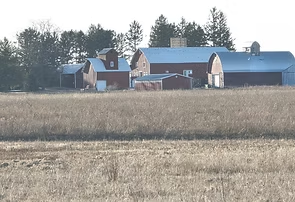
Families established farms, raised livestock, cultivated crops, and operated dairy businesses. Farming required long hours of physical labor, with horses providing much of the power needed for agricultural work.
During the 1800s, cheese production became an important local industry.
In 1866, Duncan Johnson established a cheese factory in East Plato, an area later known as Bowes. Additional cheese factories were established in North Plato in 1873 and Plato Center in 1874.
Small businesses grew alongside the farms, including general stores, blacksmith shops, feed mills, and other services supporting agricultural life.
Farming shaped not only the township's economy but also its landscape, values, and traditions.
That agricultural heritage remains an important part of Plato Township's identity today.
The Growth of Plato Center
During the mid-1800s, North Plato was one of the township's principal centers of activity.
By 1880, North Plato had a general store, post office, blacksmith shop, school, church, and cheese factory.
Plato Center was also developing, with stores, a feed mill, a cheese factory, a blacksmith shop, a school, a church, and a town hall.
A major turning point occurred in 1888 with the construction of the Chicago, Madison and Northern Railway.
Railroad construction brought workers and new economic opportunities to the area. Once completed, the railroad made transporting agricultural products and other goods more efficient.
Businesses and homes gradually shifted toward the railroad tracks, changing the physical layout of Plato Center.
The railroad helped establish Plato Center as an increasingly important community within the township.
A New Century of Progress
The early 1900s brought significant changes to Plato Township.
Between 1905 and 1908, the first automobile reportedly appeared in the township, marking the beginning of a new era in transportation.
In 1909, the Mix Dairy Company relocated its operations near the railroad, improving the transportation of milk and dairy products.
Road improvements followed, including the paving of the main road through Plato Center in 1924.
Businesses continued to develop, including general stores, garages, and a barber shop.
These improvements gradually transformed daily life while allowing the township to maintain its rural character.
The Growth of Public Education
Education continued to develop throughout the early twentieth century.
In 1915, a new grade school was constructed in Plato Center.
High school classes were organized in 1917, initially meeting above the grade school. A dedicated high school building was completed in 1920, and the first graduating class of seven students received diplomas in 1921.
The school experienced several hardships, including a major fire in 1927 and a tornado in 1933 that caused approximately $30,000 in damage.
Despite these setbacks, the community rebuilt and continued supporting local education.
By 1941, Plato Center High School had approximately 120 students, including students from surrounding communities such as Lily Lake, Wasco, and Pingree Grove.
During the following years, school consolidation brought significant changes.
Plato Center and Burlington eventually joined to form Community Unit School District 301.
In 1955, construction began on a new high school between Plato Center and Burlington, marking another important chapter in the region's educational history.
The Communities That Shaped Our Township
Throughout its history, Plato Township has been home to several small communities, each contributing to its development.
Plato Center became an important center of commerce, education, and community activity, particularly following the arrival of the railroad.
North Plato was an early center of settlement and business, supporting stores, a post office, a school, a church, and a cheese factory.
Udina developed as an early rural settlement with its own church, post office, and agricultural community.
East Plato, later known as Bowes, supported agricultural businesses and cheese production.
Plato Corners was home to the township's first school.
New Plato was another early settlement located near Bowes Creek.
Many of these communities maintained their own post offices during the nineteenth century. As roads, transportation, and communication improved, smaller postal facilities gradually disappeared.
Although some of these early settlements no longer exist as distinct communities, their names and histories remain part of Plato Township's heritage.
A Growing and Changing Community
Over the generations, Plato Township has experienced remarkable growth and transformation.
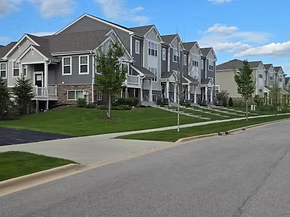
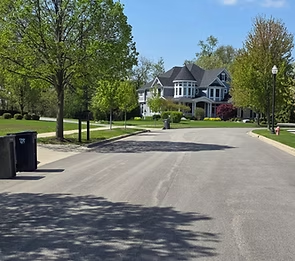
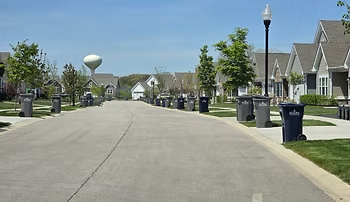
What began as a collection of small farming settlements has evolved into a community that combines rural traditions with expanding residential neighborhoods.
The township's population has grown from approximately 4,500 residents to more than 12,000, reflecting the increasing number of families who have chosen to make Plato Township their home.
Today, approximately 65% of Plato Township's population lives in urban or residential areas, while 35% resides in rural areas.
This changing population reflects the township's transition from a predominantly agricultural community to one that serves both established rural residents and growing residential neighborhoods.
Despite these changes, Plato Township continues to embrace its agricultural roots, open spaces, and rural character.
Our farms, historic communities, and natural landscapes remain important reminders of the generations who helped establish and build this township.
Growth brings new opportunities, but it also creates responsibilities. Maintaining a balance between development, preserving open space, protecting our rural heritage, and meeting the needs of our residents remains an important part of our future.
Preserving Our Heritage, Building Our Future
From the arrival of the first settlers in 1835 to the development of schools, churches, businesses, roads, and local government, Plato Township's history reflects generations of determination, hard work, and community involvement.
Nearly two centuries of change have shaped the township we know today.
While our population and communities continue to grow, the principles upon which our township developed remain important: local representation, community involvement, responsible stewardship, and respect for the land and traditions that shaped our history.
Our commitment is to serve all residents, whether they live in our established rural areas or our growing residential neighborhoods, while recognizing the unique character and needs of each.
As we look toward the future, we remain dedicated to preserving the legacy of those who came before us while responsibly planning for the generations who will follow.
Our history is more than a record of the past. It is the foundation upon which we continue to build our community.
Plato Township — Honoring Our Legacy | Building Our Future
Updated township history supplied by Mike McMahon.
Historical information based on the writings of John William Muirhead, “The History of Plato Township,” and accompanying local historical records.
Original Historical Account
Plato Township embraces Town 41, Range 7, and lies directly west of Elgin and east of Burlington. Because of the diverging correctional range line, run by the Government Surveyor between the townships numbered 41 and 42, all its north row of sections, as well as those of Elgin and Burlington, are fractional. Its west line is on the summit of the divide between the Rock and Fox Rivers and its three or four small spring brooklets, or lowland drains, flow to the creeks emptying into the Fox.
They furnished in the early days an abundance of good water for household and stock, conveniently distributed over a large portion of the township, Chicken Grove, near the southwest corner, was a body of fine heavy timber, principally oak of several varieties; but there was also considerable hickory, maple, black-walnut and butternut. The old trail of the Indians and of General Scott's army, passed diagonally entirely across it.
The general surface is quite level, yet sufficiently undulating to afford good drainage. The soil is excellent and small tracts of alternating woodland and prairie rendered it an inviting region to the pioneers. Prospecting, doubtless, along the army trail, and probably attracted by the neighboring grove, JOHN GRIGGS and his son JOHN GRIGGS, JR. located claims along the southwest part of Chicken Grove on land that became part of Sections 35 and 36 in this township in the summer of 1835.
They were upright, energetic, intelligent men and they and their descendants have ever been active and influential in local and county affairs. JOHN GRIGGS was appointed by Governor FORD one of the judges of the first election in the county in 1836. He was the first Treasurer of the new county and the first Justice of the Peace in his precinct. He kept the first tavern in the township and at it held the office of first postmaster.
JOHN S. LEE, another able and honorable man, just attaining his majority, came during the same year and located an excellent claim adjoining GRIGGS, but extending north toward the trail, October 23, 1838. He married MISS NANCY PERRY, daughter of Mr. GEORGE PERRY of Campton - we must remember that there were no townships then, and no surveyed lines of roads or lands - and they were the first couple married in these settlements. They were each as handsome, in all manly and womanly endowment, as one need wish to see.
Their son, ABIJAH A. LEE, born September 4, 1839, was the first white child born in the township. MR. LEE'S original claim of two quarter-sections, was added to, until he owned 940 acres of magnificent land. He was first elected Justice of the Peace in 1840 and served nine years. He was first elected Supervisor and served twelve years, and for forty years he served as a School Director. His first son, ABIJAH A., is now an Assistant Supervisor from Elgin Township.
Such records indicate something of the character of the first settlers of the township and equally strong men have succeeded them. Their first grists were ground near Naperville, and a little later at Boardman's mill south of Batavia, and their tracks to and from the mill marked the route of the stage road from St. Charles toward Galena, beside which GRIGG's tavern long stood. Dr. LATIMER S. TYLER and MARCUS and JOHN RANSTEAD - the latter becoming in later years a member of the State Legislature - came in 1836 and settled on Section 12.
During the period between 1838 and 1840 came Dr. DANIEL PINGREE, WILLIAM HANSON, THOMAS BURNIDGE and others. At the general election in 1844 at the "Washington Precinct," which included Plato, we find the following voters registered:
JOHN GRIGGS, JOHN GRIGGS, JR., JOHN S. LEE, JOSEPH S. BURDICK, LEMUEL WOLSEY, SOLOMON ELLIS, MORRIS GUTCHIS, PARDON TABER, GEORGE W. SPRUCE, THOMAS MATTESON, JAMES INGALLS, CHARLES THRALL, GEORGE P. HARVEY, EDWARD BURNIDGE, THOMAS BURNIDGE, EDWARD BURNIDGE, JR., STEPHEN ARCHER, MICHAEL DETRO, MARK RANSTEAD, JAMES MITCHELL, SOLOMON ELLIS, JR., A.W. HODGE, JOHN S. LEE, NATHANIEL LADD, JAMES MOREY, WILLIAM S. PECK, BENJAMIN HALL, WILLIAM D. PECK, JAMES BROWN, BALDWIN WRIGHT, JOSIAH MITCHELL, ALSON BANKER, THOMAS CLARK, SOLOMON WRIGHT, BENJAMIN FULLER, BENJAMIN F. GAGE, HARVEY GAGE, MARLEY GAGE, WILLIAM SANDERS and LORENZO MITCHELL.
This was so soon after the "land sale" that these can well be named as old settlers. As the voting precincts were arranged in 1836, the lands of this township lay in Pleasant Grove, Lake and Sandusky precincts. It became a part of Fairfield in 1840 and of Washington in 1843. Later is was called Homer, and, at the final adjustment of Congressional townships, it became Plato.
The name seems pleasant to the people, for every hamlet of the township ever has been and is "Plato" something - thus Plato Center, North Plato, Plato Corners and East Plato. It is a fine prosperous dairy township. The Chicago, Milwaukee and St. Paul Railroad cuts across the northeast corner and McQueen Station, with its tile factory, is just within its limits. Pingree Grove, with its brick and tile yards, is just over the border in Rutland Township and East Plato and Plato Center are thriving stations on the Chicago Great Western Railroad, which follows the general line of the old army trial diagonally across the township.
Its first school was taught by CHARLOTTE GRIGGS in 1840, at Plato Corners, down on the old stage road on Section 35. The first church organization was the Methodist, and they were holding services in the combined school house and town hall at Plato Center as early as 1848.
Source: Historical Encyclopedia of Illinois (Edited by Newton Bateman, LL.D. and Paul Selby, A.M.) and History of Kane County Edited by Gen. John S. Wilcox. Chicago; Munsell Publishing Company, 1904, pp. 715–716; transcribed by K. Torp.